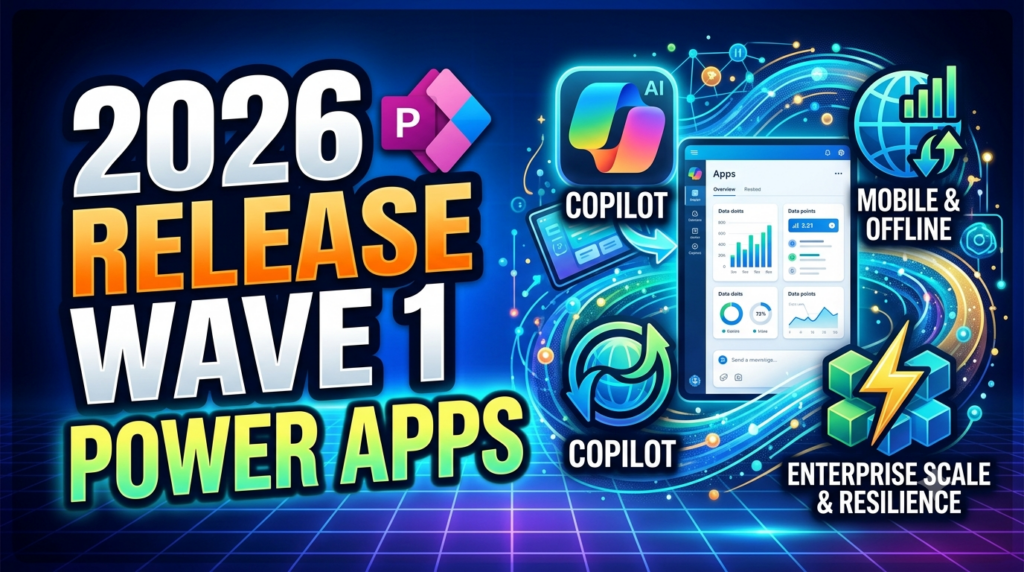
What’s New in Power Apps
If you build with Power Apps, this is the release wave to pay attention to. Microsoft’s 2026 release wave 1 rolls out between April and September 2026, and it’s less an incremental update than a genuine shift in how apps get built and how they behave once they’re live. Here’s what actually matters, without the marketing fluff.
The big theme: AI is no longer a bolt-on

In previous waves, AI features felt like extras layered on top of the “real” app. This wave treats AI as core infrastructure. Copilot now lives inside model-driven apps with full context of what the user is doing not a separate chat window bolted to the side, but something that understands the record you’re looking at and can act on it.
Pair that with Work IQ integration, which gives Copilot contextual access to your organization’s emails, meetings, Teams messages, and documents, and you get an assistant that actually knows your business instead of answering generically.
For makers, this means fewer custom integrations to wire up “smart” behavior into your apps a lot of it is becoming a platform capability you just turn on.
Modern look becomes the default
Model-driven apps are getting a refreshed, consistent UI, and importantly this modern look is becoming the default rather than an opt-in preview. The streamlined header and navigation are moving to general availability. If your organization has apps that still look like classic Dynamics from five years ago, this wave is your natural trigger point to modernize.
What to check:
if you’re an admin, review which apps will automatically pick up the modern theming versus which features need manual enabling Microsoft splits this clearly in the release plan, and it’s worth ten minutes to avoid surprising your users.
Canvas apps: mobile and offline get real investment
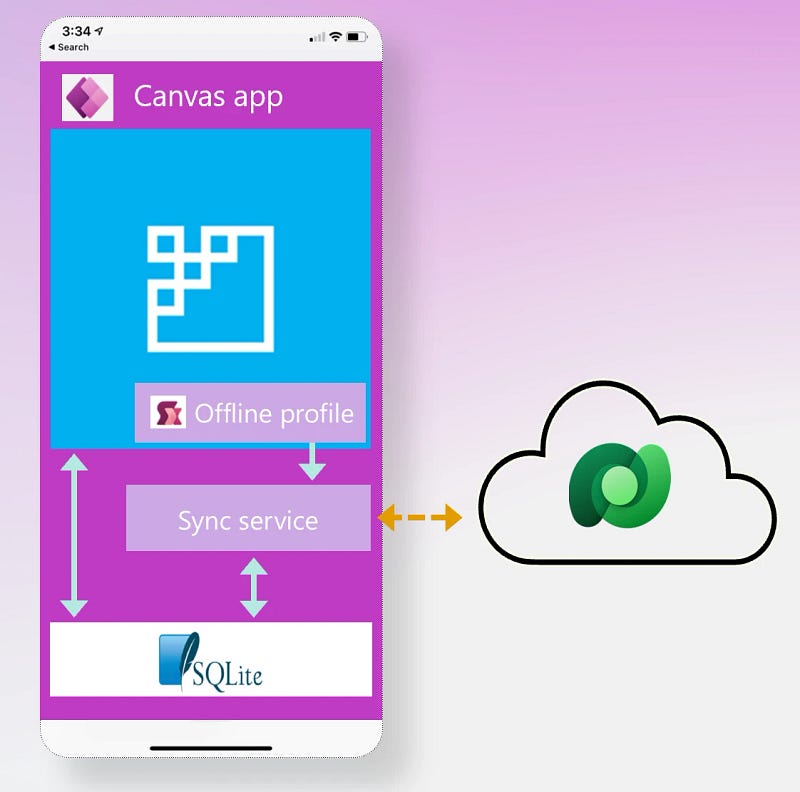
Canvas apps are getting meaningful mobile productivity and offline resilience improvements. If you’ve ever built a canvas app for field workersi nspectors, technicians, sales reps you know offline mode has historically been the weak link. This wave brings real-time Dataverse support designed specifically for offline-first scenarios, along with quality improvements across commonly used modern controls (Combo Box, Text Input, Date Picker, and others).
Agents are becoming a first-class citizen

Power Apps is leaning hard into agentic AI. You can now build agents from existing apps and deploy them to handle work autonomously, with tooling to monitor agent activity and troubleshoot when an agent gets stuck. There’s also a new Agent Feed essentially a supervision inbox that categorizes what your agents are doing into “Completed” and “Needs Attention,” so a human stays in the loop without babysitting every automated action.
For pro developers, agent programmability is expanding too Dataverse APIs, MCP server support, and a Python SDK are all part of this wave, which signals Microsoft wants Power Platform agents to be extensible well beyond low-code scenarios.
Governance gets real teeth
If you’re the person who has to answer for what Power Platform is doing across your tenant, this wave gives you more to work with: admin controls for agent security, real-time risk assessment in Copilot Studio, and AI-powered governance agents that can automate tenant monitoring and even remediation. There’s also better visibility into Copilot credit consumption with pay-as-you-go caps, which matters a lot once AI usage becomes metered and budgets start getting real scrutiny.
My take
The pattern across this wave is consistent: Microsoft is betting that the gap between “someone reports a business problem” and “a working solution exists” should keep shrinking, and AI is the lever doing most of that shrinking. If you’re a maker, don’t just wait for these features to show up go look at what’s flagged for “Users, automatically” versus what needs admin enablement in the official release plan, because the surprises usually come from features nobody turned on intentionally.
Sources: Microsoft Learn release plan documentation for Power Apps and Power Platform, 2026 release wave 1.